Tencent’s SHOU Wants to Make the Best Move the Main Event
A counter on a red bridge explains the bet behind Tencent’s new multiplayer action game. Can a move worth sharing become a reason to come back?
Tencent’s MoreFun Studios revealed SHOU (狩), a multiplayer action game built around melee combat and parkour, on 25 November 2026. The first SHOTIME playtest is planned for January 2027, according to GCORES’ developer interview. The official TapTap listing has opened recruitment and still lists the exact test date as pending. Official TapTap listing · GCORES hands-on and developer interview
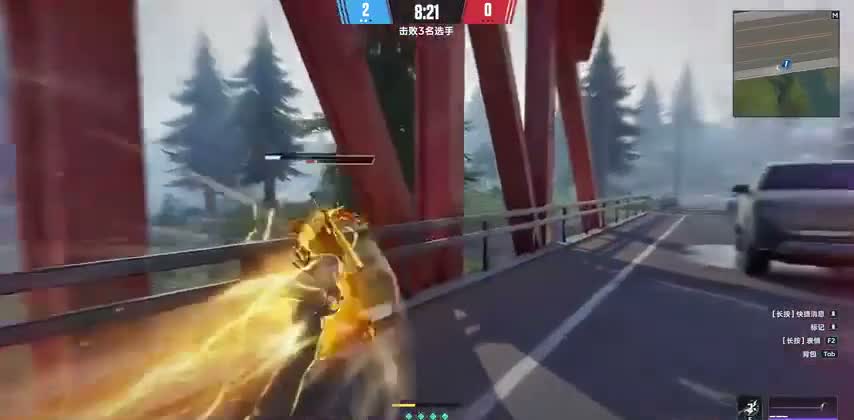
One of the most revealing moments in the gameplay is a counter on a red bridge. The gameplay montage shows a gold dash cutting across the road, then a big COUNTER flashing on screen. Even without the commentary, you can see the timing of the reversal. A viewer has something specific to replay and a player has something to try.
What is Tencent’s SHOU?
SHOU is developed by MoreFun Studios, the Tencent Games studio behind Arena Breakout and Arena Breakout: Infinite. Its official listing names PC, iOS and Android. The developers told GCORES that PC and mobile are planned to share accounts and use separate matchmaking pools. GCORES describes three competitive formats, including a battle royale-style mode, one-on-one duels and three-on-three matches. Those modes give the same idea different stages, from a duel where everyone can see the counter to a group fight where timing has to compete with everything else on screen. MoreFun Studios · Official TapTap listing · GCORES hands-on
The name does some of the work. 狩 evokes hunting, and the developers point to the way “Shou” sounds like “show.” The streetwear styling makes that second meaning visible. The fight has to make it playable. GCORES developer interview
Why design a competitive game around a move worth replaying?
At the end of a battle royale match, one player or team gets the win. A counter gives someone else a story to leave with. A friend can watch it, understand what happened, and ask how to do it. If that exchange happens often enough, players have a reason to pass the game around between matches.
My read is that the clip can work as a short lesson as well as a highlight. A clean camera angle and a readable cue let viewers see how the player earned the moment. That matters for a game crossing markets. Someone encountering SHOU for the first time can tell what happened on that bridge before they know what SHOTIME means.
What should publishers watch in the SHOTIME test?
I’d watch three things. Can a new player explain the counter after seeing it once? Can they reproduce some version of it when they play? Do they come back to try it against a real opponent? Each question checks a different link between watching, playing and returning.
There’s a trade-off here. A spectacular move can sell the game in a clip, while a hard-to-read move can frustrate the person on the receiving end. The first test has to show how clearly players can see an opening and what they can do when the fight turns against them.
We’ve looked at other reasons people return to Tencent games, from player-made experiences in Peacekeeper Elite to operator stories in Delta Force. SHOU puts that question inside the fight itself.
If your player loses the match, what happened along the way that they’d still send to a friend?