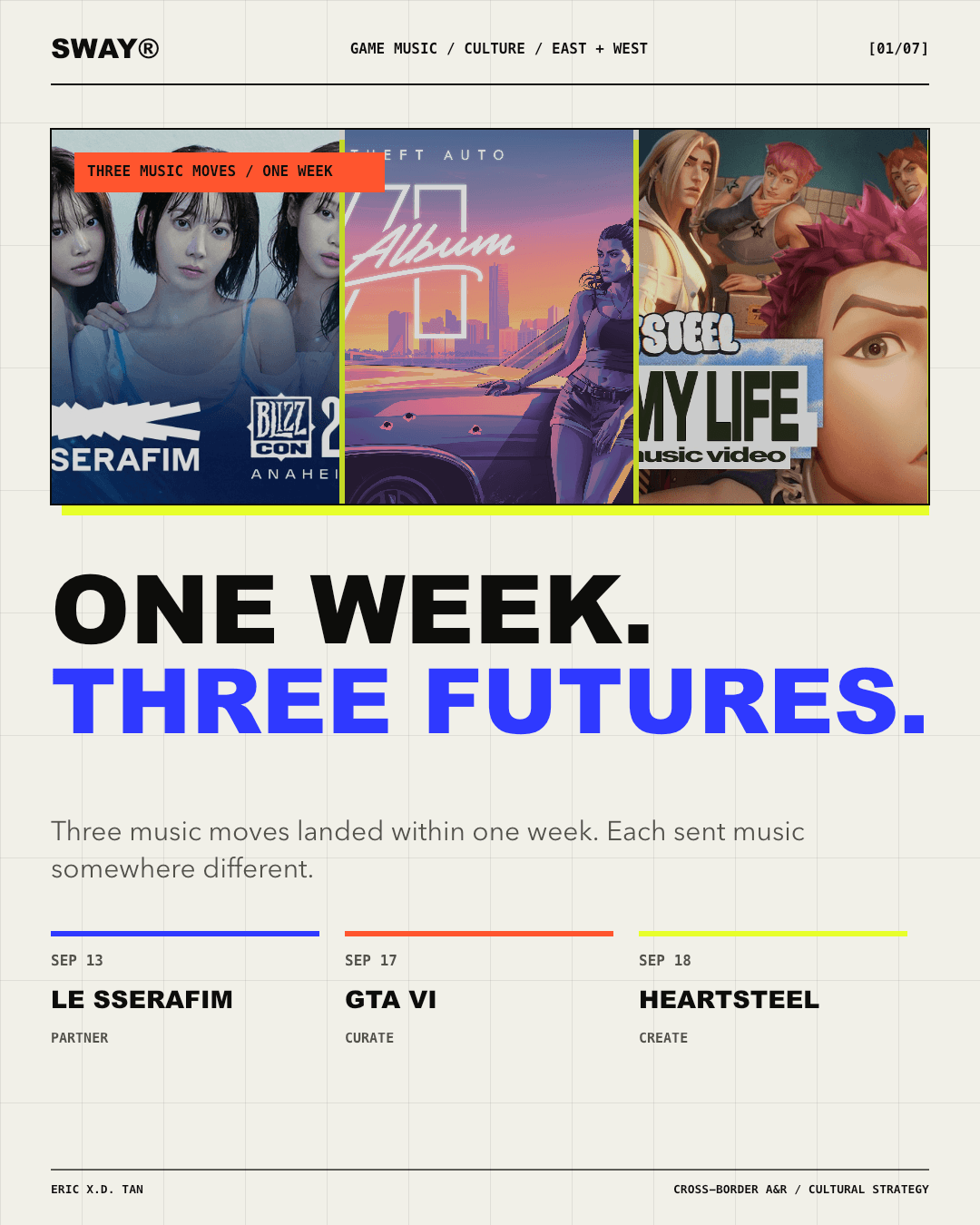
In one week, three game publishers revealed three very different ideas about what music can do.
Blizzard used LE SSERAFIM to turn fandom into participation.
Riot brought HEARTSTEEL back, showing how fictional characters can become a music property the company can keep developing.
Rockstar used Grand Theft Auto VI: The Album as world-building. Before players enter Leonida, they can already hear part of its identity.
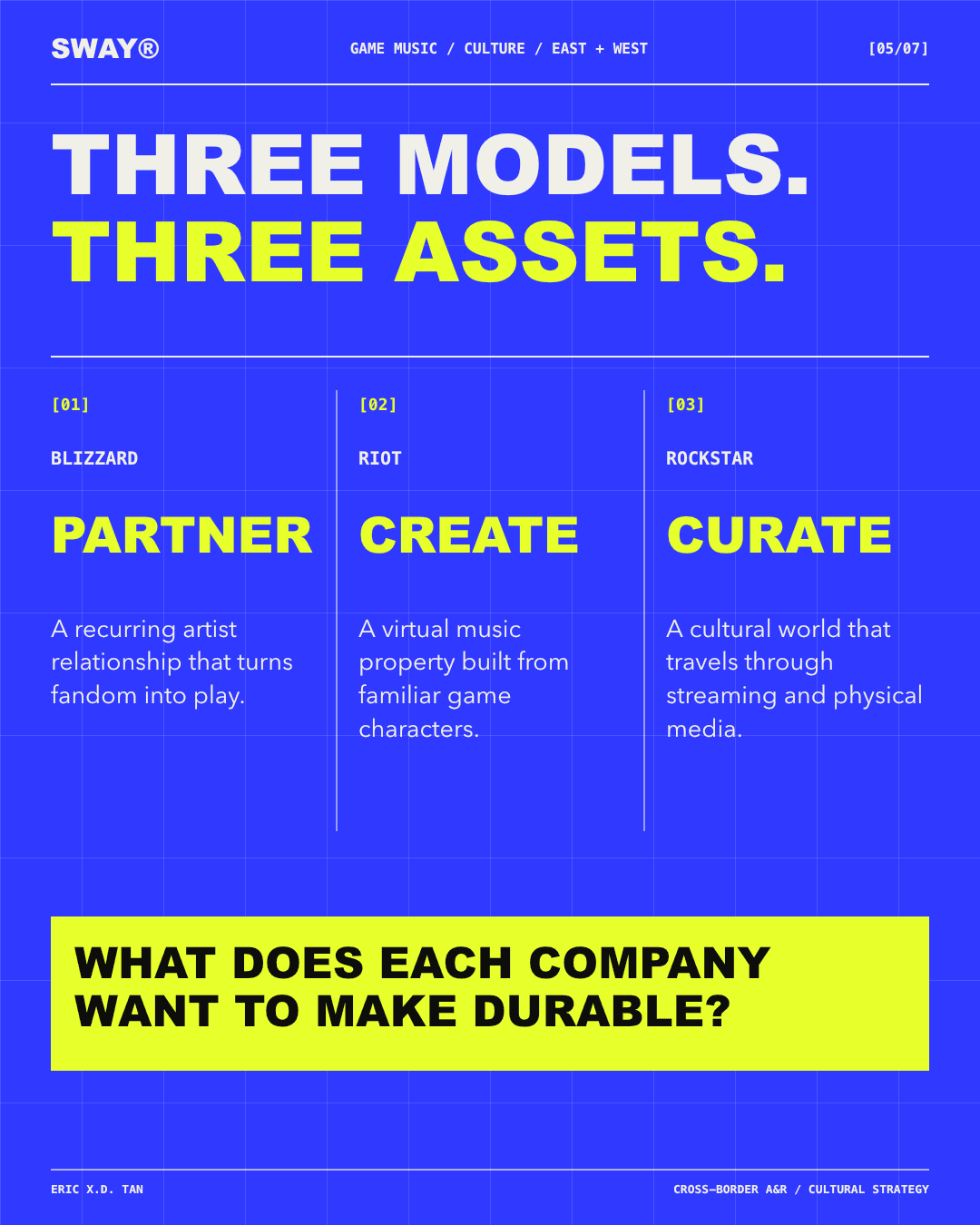
This looks like smarter entertainment marketing. It is really a story about cultural infrastructure.
The examples also expose a tempting planning shortcut: treating one successful cultural playbook as if it can stand in for an entire continent.
ASIA IS NOT
ONE MARKET.
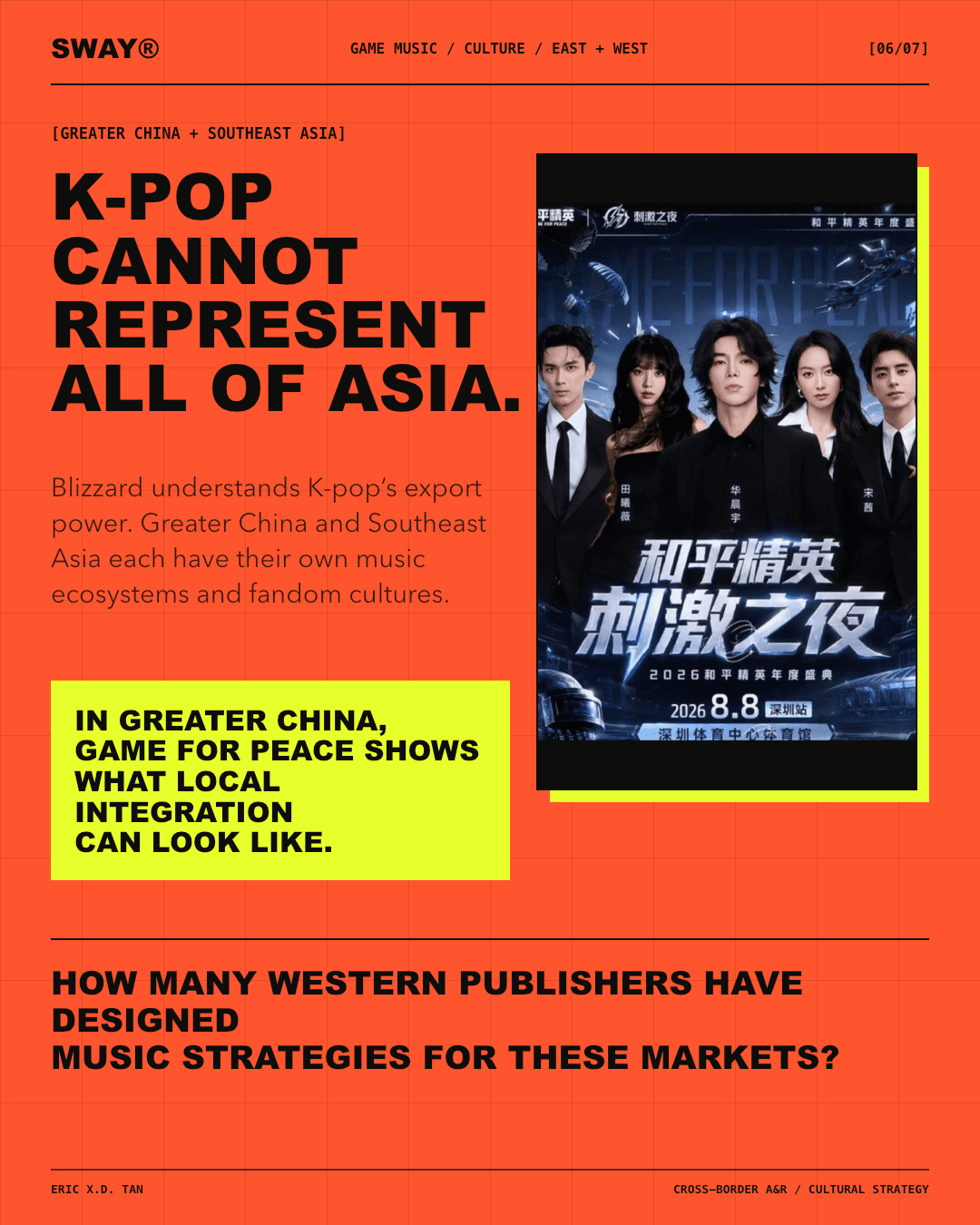
Greater China and Southeast Asia each have their own music ecosystems and fandom cultures.
Game for Peace and Hua Chenyu offer a Greater China example. Music, live spectacle and game identity were designed inside the same local cultural system.
That example should not be projected onto Southeast Asia. The region deserves strategies built around its own audiences and ecosystems.
BUILD AN ASSET.
DO NOT RENT ATTENTION.
The strongest collaborations do more than rent an artist's audience. They create something that still belongs to the game when the campaign ends: participation, intellectual property, world-building or a culturally specific community.
The question is no longer, “Which famous artist should we hire?”
Which cultural ecosystem are we prepared to understand deeply enough to build with?
Independent analysis. All referenced names and trademarks belong to their respective owners.